
IBU stands for International Bitterness Units.
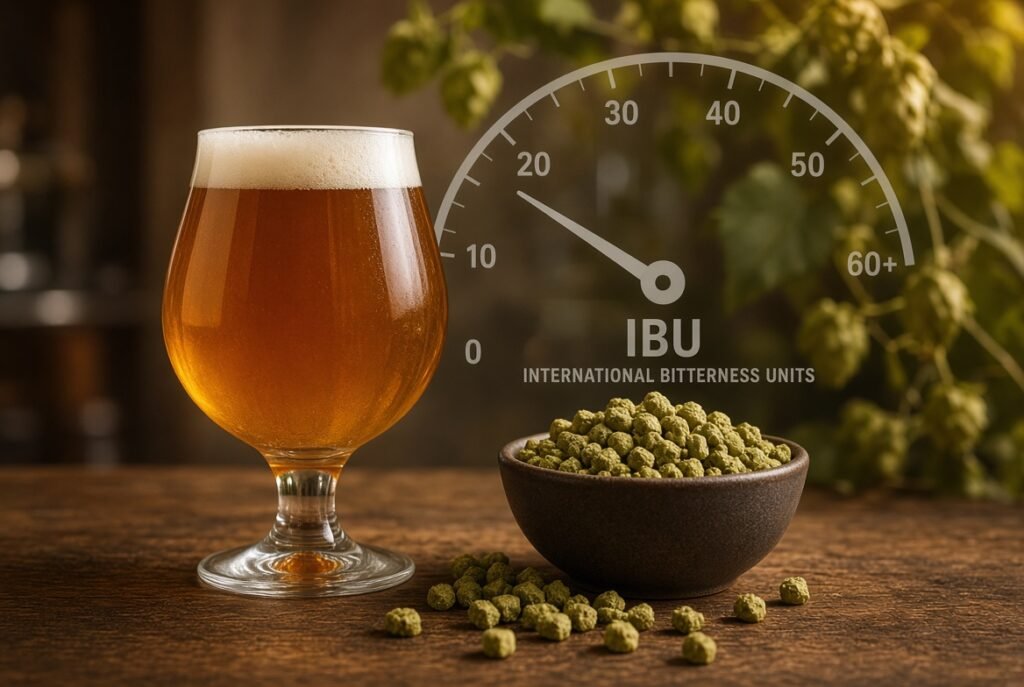
It’s a number that measures how much bitterness is in a beer, mostly from the hops. But, just to keep it from being too simple, IBU is a chemical number, not a tasting score. Two beers with the same IBU can taste very different. That’s why, as a homebrewer, it is important to understand what IBU is and isn’t.
Think of it like a spice level on a hot sauce bottle, but for bitterness instead of heat. A higher number means more bitter compounds are in the liquid. Most beers fall somewhere between about 5 and 100.
Where the bitterness comes from
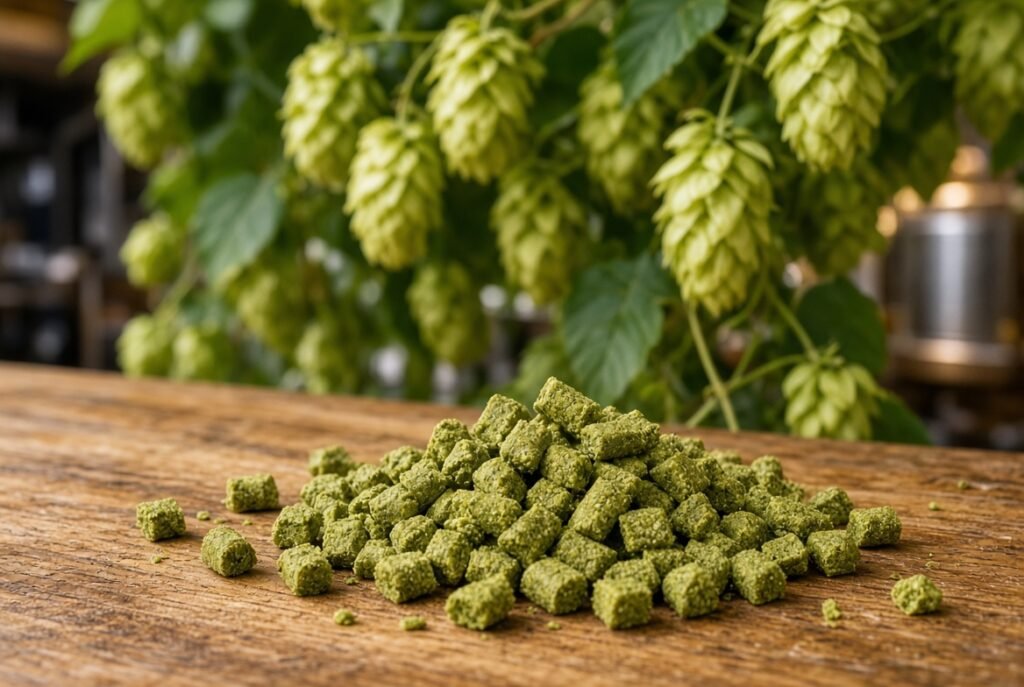
Beer is made from grain (usually barley), water, yeast, and hops. Hops are the green cone-shaped flowers of the hop plant. Inside those cones is a sticky yellow powder (lupulin) packed with resins and oils.
The key compounds for bitterness are called alpha acids. On their own, they’re not very bitter and don’t dissolve well. When brewers boil the hops in the hot liquid (called wort), heat converts (isomerizes) those alpha acids into iso-alpha acids. These are what actually taste bitter and stay dissolved in the finished
For the homebrewer, this generally means hops boiled for a long time (60 minutes or more) equals lots of bitterness, less aroma. Hops added late in the boil, or after boiling (“dry hopping”) equals more aroma and flavor, little extra bitterness.
One IBU equals roughly 1 milligram of iso-alpha acids per liter of beer (or about 1 part per million).
How the number is measured
Brewers and labs measure it with a chemical test, not by tasting. They acidify a beer sample, extract the bitter compounds into a solvent, and measure how much UV light the solution absorbs at a specific wavelength (275 nm). The absorbance is multiplied by 50 to get the IBU number. This method was standardized in the 1960s by brewing chemists.
It’s a lab measurement of certain hop-derived compounds, not a direct score of “how bitter this will taste to you.”
Typical IBU ranges by style
Individual beers vary a lot. These numbers are approximate.
| Style | Typical IBU range | What it usually tastes like |
|---|---|---|
| Light lager | 5–15 | Very mild, almost no bitterness |
| Hefeweizen (wheat) | 8–15 | Soft, barely bitter |
| Blonde ale / Helles | 15–25 | Light bitterness, clean |
| German/Czech pilsner | 25–45 | Crisp, noticeable bitter finish |
| Pale ale | 30–50 | Noticeable but balanced |
| Stout / Porter | 25–50 | Bitterness often feels roasty rather than sharp |
| American IPA | 40–70 | Clearly hoppy and bitter |
| Double / Imperial IPA | 60–100+ | Bold to very bitter |
| Barleywine | 50–100 | High on paper, often balanced by lots of malt |
Why the number doesn’t always match what you taste
As we said from the beginning, this is the most important part for beginners. IBU is a chemical number, not a tasting score. Two beers with the same IBU can taste very different.
Perceived bitterness depends on:
- Malt sweetness – A big, malty beer can hide bitterness that would taste sharp in a light, dry beer. Brewers sometimes use a rough “BU:GU ratio” (IBUs divided by gravity points) to judge balance. Around 0.5 is often balanced; higher feels more bitter; lower feels sweeter.
- Residual sugar and body
- Alcohol level
- Carbonation
- Water chemistry (sulfate can make bitterness feel sharper; chloride can soften it)
- Other hop compounds and roasting from dark malts
Human taste buds also have limits. Most people can’t reliably tell the difference much above about 80–100 IBUs. Beers labeled “150 IBU” or higher are often more marketing than something you’ll actually taste as that much more bitter—the compounds stop dissolving well, and your palate maxes out.
Quick practical tips for someone new to homebrewing
- Low IBU (under ~20–25): Easy-drinking, less aggressive. Good starting point if you want something approachable.
- Medium (25–45): Often balanced styles where bitterness and malt play nicely together.
- Don’t choose (or avoid) a beer solely by the IBU number. Style, description (“citrusy,” “roasty,” “malty,” “hazy”), and personal taste matter more.
- “Hoppy” usually means strong hop aroma and flavor (often from late or dry hops), which is related to but not the same as high bitterness (IBU).
In short: IBU tells you roughly how many bitter hop compounds are in the beer. It’s useful for comparing styles and for brewers controlling their recipes, but the full experience in the glass depends on everything else in the beer too. The more different beers you try, the better you’ll get at connecting the numbers on the label to what you actually enjoy.
Leave a Reply