
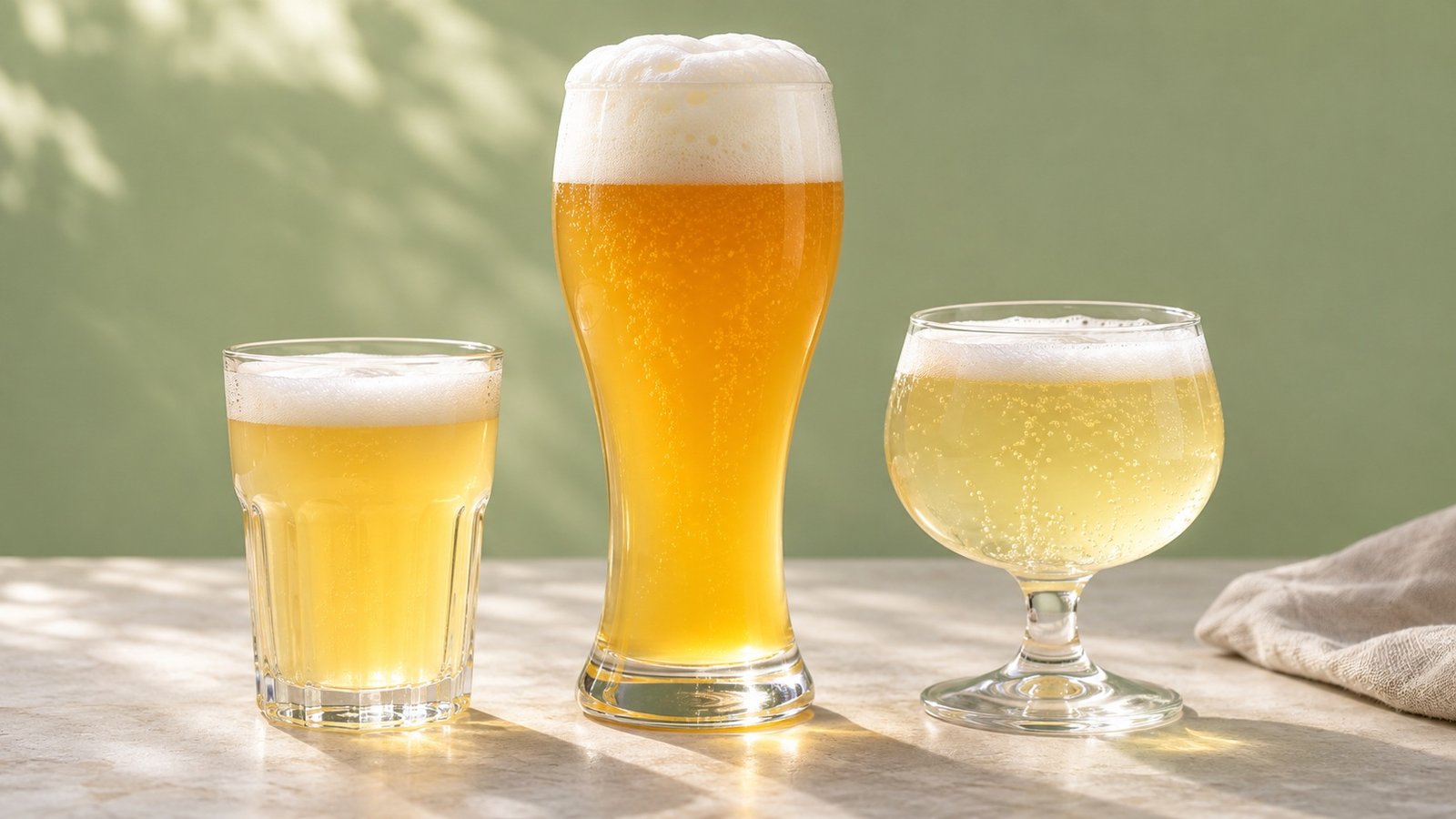
A Belgian witbier and a German hefeweizen can look almost identical in the glass. Both can be pale, cloudy, and topped with a generous white head. Take a sip, though, and the difference comes through. Witbier leans toward orange and coriander; hefeweizen is known for banana and clove, and Berliner Weisse has a bright, lactic tartness. The names overlap because they describe the beer’s color or its use of wheat. The full name tells you more about what to expect.
Wit vs. Weisse vs. Weizen at a glance
| Name on the label | What it usually means | What to expect |
| Wit or Witbier | Belgian-style wheat beer | Orange peel, coriander, a soft grainy character, and a refreshing finish |
| Weissbier or Hefeweizen | Classic German wheat beer, usually the pale, cloudy version | Banana and clove from the yeast, with a fluffy mouthfeel and lively carbonation |
| Berliner Weisse | A light, sour wheat beer from Berlin | Clean lactic tartness, very high carbonation, and low alcohol |
| Weizen | German for wheat, often part of a more specific beer name | Look for the rest of the name to tell you whether it’s cloudy, clear, dark, or stronger |
Pouring these beers side by side? Our guide to choosing the right beer glass explains why a tall Weizen glass leaves room for a hefeweizen’s foam.
What is a Witbier?
Witbier means “white beer” in Dutch. The name fits its pale, cloudy appearance. The Belgian style traditionally uses unmalted wheat alongside pale barley malt, with coriander and orange peel adding a citrusy, gently spicy aroma. A good witbier keeps those additions in balance. You should still be able to taste the soft, grainy wheat underneath the spice. Hoegaarden is a classic example. bjcp.org
What does Weisse mean in beer?
Weiss means “white” in German. On a beer label, Weisse can point to different styles, so read the whole name. A Bavarian Weissbier or Hefeweisse generally points to the familiar German wheat beer with banana and clove aromas. Berliner Weisse is a distinct Berlin style with a crisp, lactic tang. The BJCP lists Berliner Weisse at 2.8–3.8% ABV, which helps explain why it drinks so differently from a typical hefeweizen.
What is a Weizen?
Weizen means “wheat” in German. Hefeweizen means “yeast wheat beer” and refers to the cloudy version most people associate with German wheat beer. Its signature banana and clove aromas come from fermentation. The brewer gets those flavors by choosing a German wheat beer yeast.
Other words attached to Weizen give you more clues. Kristallweizen is the clear, filtered version. Dunkelweizen is darker and brings more bread crust and toast to the glass. Weizenbock is stronger and maltier, with both pale and dark versions.
What this means for extract homebrewers?
If you’re brewing with extract, hefeweizen is the simplest of the three to start with. Use wheat malt extract, keep the hop bitterness restrained, and pick a German wheat beer yeast that produces the banana and clove character you want.
For a witbier, wheat malt extract makes a workable base, but check the label. Wheat extract commonly contains both malted wheat and barley. If you want the traditional unmalted wheat component, use a partial mash with flaked wheat and a base malt that can convert it. Add coriander and orange peel with a light hand so the spices leave room for the wheat and yeast character.
For a Berliner Weisse, choose a recipe built around low starting gravity, light hopping, and a reliable way to develop clean lactic tartness. That tart finish is what makes the beer recognizable.
If you want to taste the difference for yourself, pour a Belgian witbier and a German hefeweizen side by side. Smell them before you sip. The orange and coriander in the wit and the banana and clove in the hefeweizen are easier to pick out when you taste them together. Add a Berliner Weisse to the lineup and pay attention to the finish. It’s the one that leaves a clean, mouthwatering tartness.
Leave a Reply