
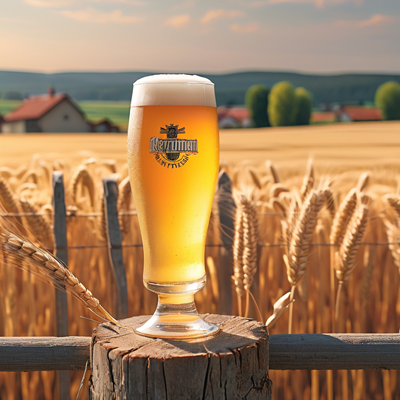
“Witbier” translates from Flemish/Dutch to “white beer,” referring to its pale, cloudy appearance caused by suspended yeast and unmalted wheat proteins. It originated in the 14th century in the Flemish region of Belgium, with the village of Hoegaarden widely regarded as its birthplace. Commercial examples in the US include Shock Top and Blue Moon.
Our recipe was an extract kit from Northern Brewer, one of our top online stores. They titled the kit Blue Loon. Their major competitor, More Beer, has a similar recipe kit called Lunar Shock. Both kits from Northern Brewer and More Beer are styled after a Belgian Witbier using wheat versus barley. Both also use sweet orange and coriander.
There are actually 3 different German ale wheat beer styles. Witbier, Weisse, and Weizen. I describe each of them for you here.
By the way, I had no idea that coriander, the almost pepper-like spice, was related to Cilantro. Coriander is the dried seeds from Cilantro plants.
I cooked the More Beer ‘Lunar Shock’ recipe last summer. Being that the two recipes are supposed to mimic the same style of commercial beers, I thought it would be cool to compare the recipes. I also had a few neighbors do a blind taste test of my homebrew versus a Shock Top. Flavor, freshness, and color unanimously favored the homebrew!
Northern Brewer Belgian Witbier Recipe Kit Included
- Specialty Grains: None
- Fermentables: 3.15 lbs Wheat Malt Syrup, 3.15 lbs Gold Malt Syrup, 1 lb Wheat Dried Malt Extract (DME)
- Hops: 1 oz Hallertau (60 minutes)
- Other Ingredients: 1 oz sweet orange peel, 0.5 oz coriander seeds (5 minutes)
- Yeast: SafAle WB-06
The overall fermentable grain bill was similar, about 7 pounds. However, almost half of the fermentables for this recipe were barley. Wheat was 100% on the earlier recipe. This one also used 6 pounds of liquid malt extract. That told me right away that this beer would be darker in color, and it was.
As a general rule, using dried malt extract (DME) is preferred for lighter colored beers. Liquid malt extract (LME) is almost always darker. Some claim that regardless of how well you stir in the LME, some scorching or caramelization will happen at the bottom of the brew pot.
LME is much more convenient, in my opinion. DME is like adding flour to boiling water. It clumps and takes forever to get all dissolved and thoroughly mixed in.
Mittelfruh was the hops for the first recipe, Hallertau for this one. Both are relatively similar.
There were 3 other significant differences:
- The first recipe used 2 oz of orange peel. This one just 1 oz.
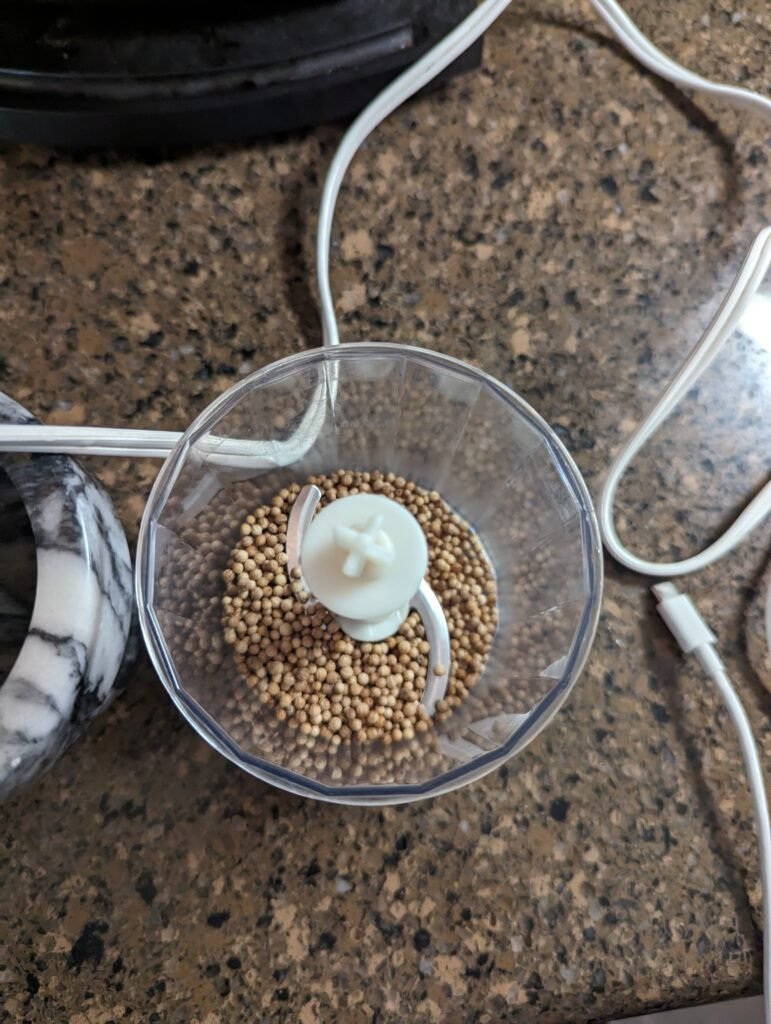
- The first recipe came with coriander powder. This recipe had whole coriander seeds that I crushed with a spice grinder.
- The first recipe called for the orange & coriander to be added with 10 minutes remaining in the boil; this recipe calls for it with 5 minutes remaining.
It was cool to grind fresh spices to add to my recipe, and I believe it makes that spicy, almost pepper flavor profile really shine.
The latest recipe, Blue Loon, also had no steeping grains. The addition of oats to steep in the first recipe helps create the hazy beer that the traditional Witbier is known for.
Cooking this recipe was pretty simple. With no steeping grains, I just got my 2.5 gallons of strike water to a boil, took the pot off the burner, and added all the fermentables.
Once back to a boil, I started the 60-minute timer and added the hops. With 5 minutes remaining, I added the orange peel, crushed coriander, and a Whirlfloc tablet.
The other difference was when I poured the cooled wort into the primary fermenter. I usually try to keep a lot of the hops and other additive remnants in the bottom of the brew pot. This time, I decided to bring almost all of it over. I wanted the orange peel and coriander to sit in the fermenter. I also brought the total volume in the fermenter to just over 5.5 gallons to account for the extra sludge at the bottom that I wouldn’t be able to bottle.
After 21 days in the primary fermenter, I bottled the beer and was able to get a full two cases, 48 bottles.
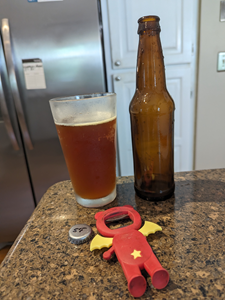
It has been 8 days since bottling, and I got the always gratifying woosh sound when popping the cap. As suspected, the color was a bit darker than any Wheat Beer I have ever brewed.
Brewing Notes:
- Style: Wheat Beer
- Original Gravity: 1.053
- SRM: 6 (estimated)
- IBUs: 17 (estimated)
- ABV: 5.1%
Tasting Notes:
- Aroma: Soft fresh-baked bread malt aroma with subtle lemon and orange citrus notes and a faint herbal character.
- Appearance: Deep golden straw color with a moderate haze. Firm and lasting brilliantly white foam head.
- Flavor: Malt-driven flavors of light bread crust and oatmeal with a supporting orange and lemon citrus character. Low bitterness with no hop flavor.
- Mouthfeel: Medium-bodied with a silky smooth finish. Clean finish on the palate.