
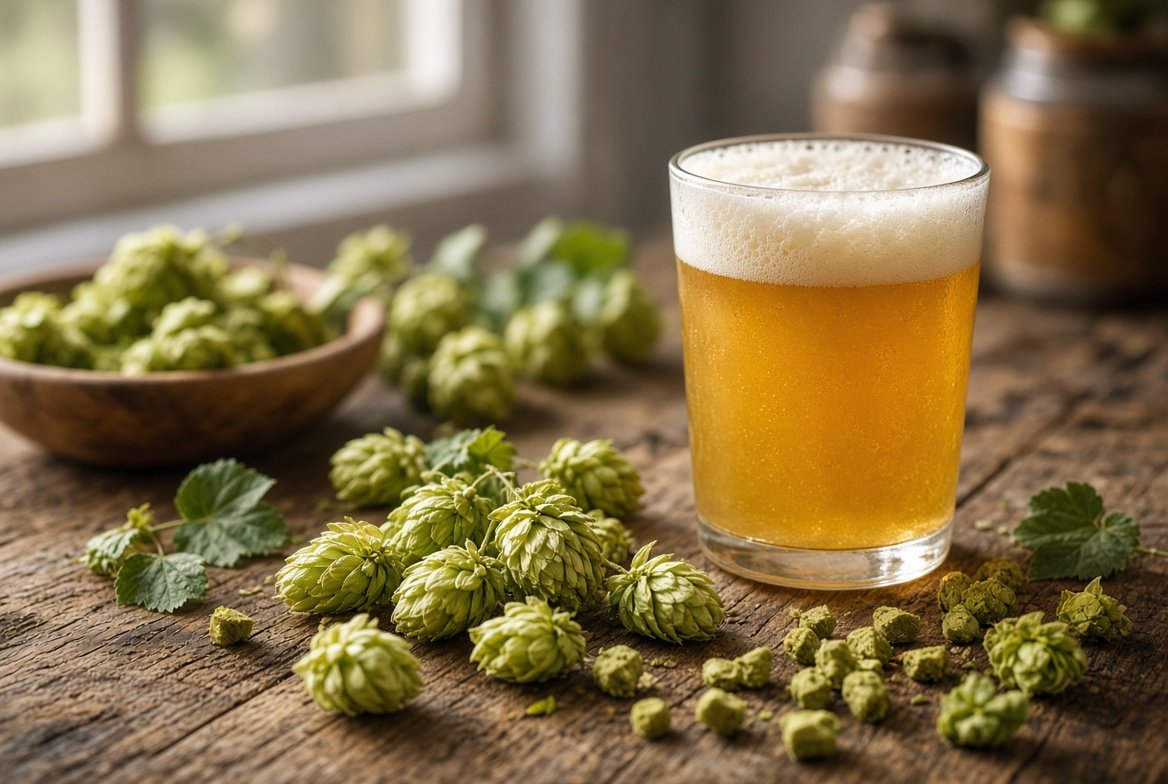
Major hop varieties available to most homebrewers fall into several classic groups (plus modern cultivars), each with distinctive flavor and aroma profiles.
These are widely stocked as pellets by suppliers and work across styles. Profiles are strongest with late additions (flavor), whirlpool, or dry-hopping (aroma); early boil additions mainly contribute bitterness via alpha acids. Exact character can vary by crop year and growing region.
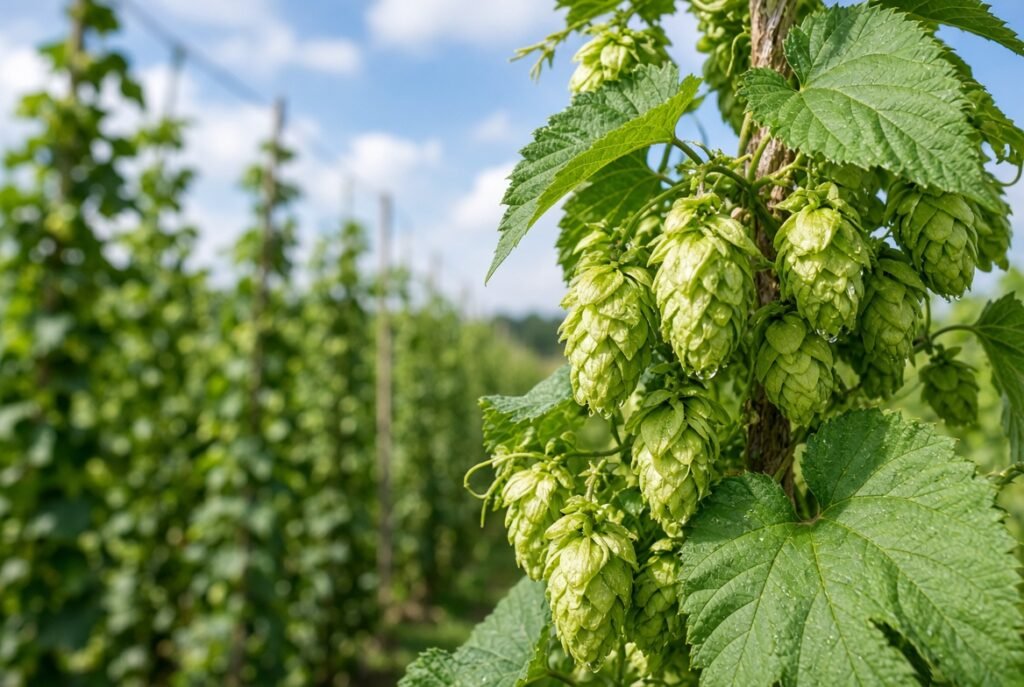
Noble Hops (Classic Continental European / Landrace)
These traditional low-alpha (typically 2–6%) European hop varieties deliver delicate, refined, smooth bitterness with spicy, floral, herbal, and earthy notes. They define many lagers and pilsners.
- Saaz (Czech): Spicy, earthy, floral, herbal, mild. Signature of Czech/Bohemian Pilsner.
- Hallertau Mittelfrüh (German): Floral, spicy, mild herbal, “noble.” Classic for Munich Helles, Märzen, Kölsch.
- Tettnang (German): Spicy, floral, herbal, slightly fruity. Suited to German Pilsner, wheat beers, lagers.
- Spalt (German): Spicy, herbal, delicate, earthy. Used in German lagers, Altbier, Kölsch.
Classic English Hops
Earthy, floral, honeyed, woody, herbal, and refined character with relatively soft bitterness. Backbone of English bitters, ESBs, milds, porters, and stouts.
- East Kent Goldings (EKG): Floral, honey, spicy, earthy, refined. Ideal for English Bitter, ESB, Pale Ale.
- Fuggle: Woody, earthy, floral, mild vegetal. Common in English Bitter, Mild, Stout, Porter.
- Challenger: Herbal, spicy, lightly fruity.
- Styrian Goldings (Slovenian Fuggle-type): Earthy, floral, slightly spicy, resinous. Used in Belgian and English ales.
American “C” Hops and Classic American Varieties
Bold citrus, floral, pine, and sometimes pungent/resinous notes that helped define American craft beer and West Coast-style IPAs/Pale Ales.
- Cascade: Grapefruit, floral, citrus, spicy. Iconic American Pale Ale hop; versatile dual-purpose.
- Centennial: Floral, citrus (often lemon), medium intensity. Sometimes called “Super Cascade.”
- Chinook: Pine, spicy, grapefruit, pungent. Assertive for IPAs and stouts.
- Columbus / CTZ (Columbus-Tomahawk-Zeus): Pungent, earthy, dank, black pepper, resinous. High-alpha dual-purpose/bittering with strong character.
Modern American Aroma Powerhouses
Intense tropical fruit, citrus, berry, stone fruit, and sometimes dank or resinous notes. Dominate contemporary IPAs, NEIPAs, and hop-forward ales; excellent for late and dry-hop additions.
- Citra: Tropical fruit, citrus, passion fruit, lime, gooseberry, mango. Extremely popular for juicy/hazy styles.
- Mosaic: Complex mosaic of blueberry, tropical, mango/pineapple, earthy, herbal, stone fruit.
- Amarillo: Orange, floral, tropical, grapefruit.
- Simcoe: Pine, berry, tropical, citrus, earthy/dank.
Others commonly available: El Dorado (tropical, candy, watermelon, stone fruit), Idaho 7, and more.
Southern Hemisphere (Australia & New Zealand)
Distinct tropical, passionfruit, lime, gooseberry, and sometimes wine-like characters that differ from typical American hops.
- Galaxy (Australia): Passion fruit, peach, citrus, clean tropical.
- Nelson Sauvin (New Zealand): White wine, gooseberry, grapefruit—unique and polarizing.
- Motueka (New Zealand): Tropical, lime, lemon zest, stone fruit.
- Riwaka (New Zealand): Grapefruit, passion fruit, citrus.
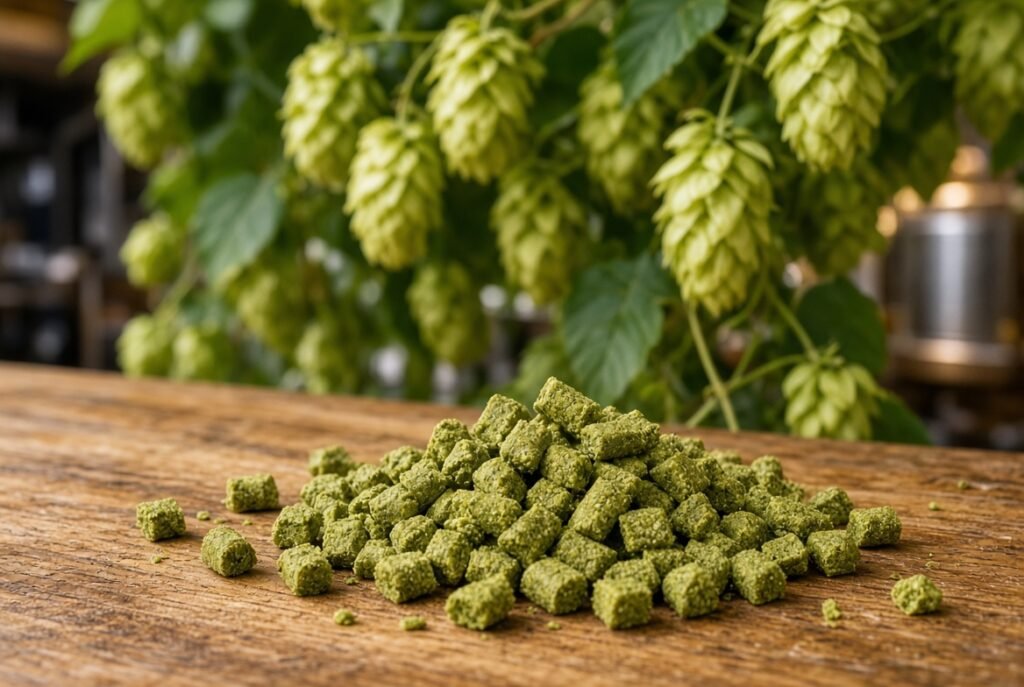
High-Alpha / Clean Bittering Options
Useful primarily for efficient bitterness (often neutral or lightly flavored) when you want hop character from other additions.
- Magnum (German): Clean, neutral, faintly floral—widely used for clean bittering across styles.
- Others: Warrior, Nugget, and high-alpha CTZ.
These groups cover the hop varieties most homebrewers regularly encounter and use. Blends are common (e.g., Citra + Mosaic for tropical complexity; Cascade + Centennial + Columbus for classic American IPA character; Saaz + Tettnang for refined lager; EKG + Fuggle for English styles). Always check alpha acid percentages on the package for accurate bitterness calculations, and store hops cold and airtight for best results.
Disclaimer: Hop character can vary significantly by crop year, growing region, storage conditions, and how the hops are used in your brew. The descriptions above are general guides based on common consensus and are not guarantees of exact results. This is not intended to be a comprehensive list of all hop varieties. Always brew responsibly, follow standard food-safety and brewing practices, and treat any advice as informational rather than professional recommendation.
Learn more about hops and their bitterness contributio0n here: What is the Beer Bitterness Scale?
Leave a Reply